
Quick Summary
The best escape room for teenagers offers harder puzzles, real autonomy and a storyline that doesn’t talk down to them. Choose by age fit, difficulty and scare level, and ask whether the puzzles reward collaboration within the escape room teenagers group.
- Start by asking how old the youngest player is, how much puzzle experience the group has, and how much scary content everyone can handle.
- Pair the strongest problem-solver with the youngest player so the younger teammate still contributes.
- Classic puzzle, story-driven and horror-themed rooms suit different teens, so match the style to the group’s strongest preference.
- Ask whether minors can play without an adult, whether the room is accessible, and what the quoted price includes.
- Confirm group size limits and build in buffer time, since a 60-minute game often takes closer to ninety minutes in total.
Table of Contents
- Why Teens Need Different Escape Room Picks Than Younger Kids
- How to Judge Age Fit, Difficulty and Scare Level for Teens
- Room Types Compared: Classic Puzzle, Story-Driven and Horror Themes
- Group Size, Supervision and Teen Logistics
- DIY Escape Room for Teens: Building One at Home
- How to Make an Escape Room at Home Easy for the Whole Family
- Booking Your Teen Escape Room Visit or Planning a Family Night In
- Frequently Asked Questions
Why Teens Need Different Escape Room Picks Than Younger Kids
The best escape room for teenagers is rarely the one marketed for children. Teens want harder puzzles, more autonomy and a storyline that doesn’t talk down to them, and most family-oriented rooms underdeliver on all three. At United Escapes of America, our rooms are built to give older players genuine challenge while younger groups still have a good time.
Teenagers also think about escape rooms differently. A nine-year-old may be happy following a clue trail, while a 15-year-old usually wants to crack the mechanism themselves and argue about the solution with friends. Look for rooms where the puzzles reward collaboration rather than one person solving everything.
A small digital escape room trial in higher education described the format as a successful and engaging team-bonding activity that encouraged student collaboration (University of Bath Teaching Hub case study on digital escape rooms as team bonding). That collaborative dynamic is exactly what makes the format appealing to teens.
How to Judge Age Fit, Difficulty and Scare Level for Teens
Start with three questions before you book: How old is the youngest player? How much puzzle experience does the group have? How much scary content can everyone handle? Those answers narrow the field faster than any ranking list.
Age suitability matters more than most parents expect. A room can be perfectly safe for a 13-year-old and still too intense or too abstract to be fun. Ask the venue directly whether a room suits a mixed-age group before you commit.
Minimum Age and Mixed-Age Groups
Our rooms have no age restrictions, which makes mixed-age groups easy to plan. A practical approach is to pair the strongest problem-solver with the youngest player, so the younger teammate still contributes.
Mixed groups work best when the room offers multiple entry points. Pure logic puzzles can freeze younger players, while searches and physical clues keep everyone involved.
Scary Content and Intensity Levels
Scare level is the most personal factor. Some teens love jump scares and actors in costume. Others find them stressful and prefer a suspenseful mystery. Our diverse themes include both scary and family-friendly options, so match the room to the group rather than assuming older always means more intense.
Tell the team ahead of time how much scares you. A quick conversation prevents a teen from quietly dreading the entire session.
Room Types Compared: Classic Puzzle, Story-Driven and Horror Themes
Escape rooms fall into three broad styles, and each suits a different teenager. The useful question is not which style is “best” but which style fits the specific group in front of you. Use the comparison below as a decision tool rather than a ranking.
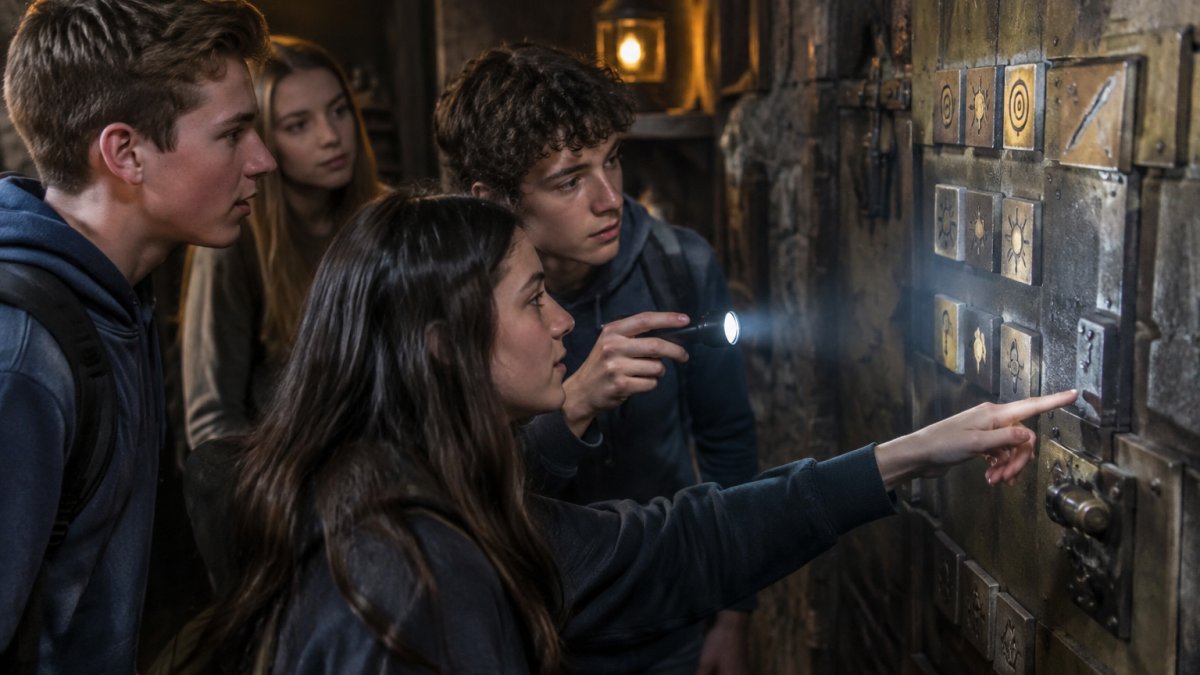
- Classic puzzle rooms focus on locks, codes and logic. They suit teens who enjoy brainteasers and want a clear sense of progress. Difficulty usually scales with the number of sequential steps rather than the number of locks, so a room with eight simple locks can be easier than one with three multi-stage mechanisms.
- Story-driven rooms build a narrative that unfolds through props and clues. They suit teens who like immersion and roleplay. The trade-off is pacing: a strong story can slow experienced solvers who want to move fast, while a weak story can make a puzzle room feel like a themed worksheet.
- Horror-themed rooms rely on atmosphere, sound and suspense. They suit teens who want a thrill but may not handle heavy gore. Intensity is not the same as difficulty, and a room can be scary without being hard or hard without being scary.
| Room Type | Best For | Typical Difficulty Range | Main Drawback |
|---|---|---|---|
| Classic puzzle | Logic-focused teams | Low to high, driven by step count | Can feel abstract to casual players |
| Story-driven | Immersive, roleplay-minded groups | Low to medium, driven by narrative pacing | Storyline may slow experienced solvers |
| Horror-themed | Thrill-seekers | Medium, driven by atmosphere and timed events | Too intense for sensitive players |
A transparent way to compare rooms is to score each candidate on six criteria before booking: age fit (does the room work for the youngest player?), puzzle quality (are the mechanisms varied or repetitive?), difficulty (how many steps and how much parallel work?), atmosphere (scary, suspenseful or neutral?), value (what does the per-person price include?), and accessibility (can every player physically and sensorially participate?). Most practitioners find that a room scoring well on age fit and accessibility is a safer bet for a mixed teen group than one that scores high only on difficulty.
Pick by the strongest preference in your group. A mixed group of thrill-seekers and puzzle fans often picks a story-driven room with horror elements. If the group is split, choose the lower intensity level and let the thrill-seekers add atmosphere through the theme rather than through jump scares.
Watch out: promotional descriptions often label a room “challenging” when it is merely long, so ask the venue how many puzzles run in parallel and whether a hint system is available before you treat difficulty as a selling point.
Group Size, Supervision and Teen Logistics
Teen groups usually need less hand-holding than younger kids, but they still need clear logistics. Confirm group size limits before booking, especially for birthday parties. Ask whether the room works for your group size before you book.
Supervision expectations vary. Some teens are fine going in with friends alone, while others need an adult nearby. Ask the venue three questions before booking: Can minors play without an adult present? Does an adult need to be in the room or only on the premises? How do staff monitor the room and how do players request hints?
For birthday parties, plan the logistics as carefully as the room. Confirm whether the venue allows outside food or cake, whether there is a party room or only a lobby, and how much time is built in before and after the session. A common pattern is a 60-minute game with 15 minutes for briefing and 15 minutes for photos, so a party that looks like one hour often occupies closer to ninety minutes.
Cost is part of the logistics. Pricing depends on factors such as day, time and room type. For current prices, visit the United Escapes of America website or request a quote. Before you pay, ask what the quoted price includes, whether a private-room upgrade costs extra, whether a deposit is required, and what the cancellation and refund terms are.
Accessibility deserves a question of its own. Ask whether the room is wheelchair accessible, whether it involves stairs, darkness, confined spaces, loud sounds, or physical challenges such as crawling or lifting. If a player has hearing, vision, sensory, or mobility needs, request accommodations when you book rather than on arrival, because staff need time to adjust the room or assign a game master.
Plan around timing too. Escape room sessions run to a fixed clock, so arrive early and avoid tight connections to other activities. Build in buffer time for parking, check-in, and the briefing, and confirm the venue’s late-arrival policy before you commit a group to a start time.
DIY Escape Room for Teens: Building One at Home
A home escape room is a cheap, flexible alternative. Start with a simple theme, such as a missing family heirloom or a locked diary. Hide three to five clues around the room, each leading to the next. Use a combination lock, a few padlocks and a timer.
Watch out: do not hide clues in places that could damage property or create safety hazards, such as inside outlets or on high shelves that require climbing.
Test the puzzles yourself first. A clue that makes sense to you may be impossible for a teen who has never seen the setup. Give hints on a card that players can request after a set time.
How to Make an Escape Room at Home Easy for the Whole Family
Keep the first version small. One room, one locked box and four clues is enough for a satisfying evening. Print clues on colored paper so younger players can spot them quickly. Write the time limit on a whiteboard so the group can track progress.
Build difficulty gradually. Start with direct clues and add abstract ones as the family gets the hang of it. Assign roles, such as a clue finder, a code keeper and a note-taker, so everyone contributes.
For a more polished version, use our at-home escape games with augmented reality, which deliver a themed experience without building the set yourself.
Booking Your Teen Escape Room Visit or Planning a Family Night In
Book the mansion experience for the most immersive version of the hobby, or choose our at-home games for a family night in. Our mobile scavenger hunts and Renaissance Festival mini escapes also suit groups that want something outdoors.
Before booking, confirm the room, group size and start time. For questions about private requests or group bookings, contact our team and find all of our locations. Upcoming events, including the scavenger hunt, are listed on our events page for groups looking for a supervised outing.
Ask about cancellation and refund terms before you pay.
Frequently Asked Questions
Is an escape room appropriate for 14 year olds?
Yes, most escape rooms accept 14-year-olds, and many venues have no strict minimum age for rooms. Check each room’s age recommendation and content notes before booking, since horror-themed rooms can be more intense than classic puzzle rooms. A 14-year-old usually handles story-driven and moderate-difficulty rooms well, especially when playing with friends or family who can help with harder puzzles. If your teen is unsure, start with a family-friendly theme and move up in intensity from there.
Can a 13-year-old go to an escape room?
Many 13-year-olds can go to an escape room, particularly with an adult or a group of friends. Look for venues that list a minimum age or state that no age restriction applies, and ask about scare level if the theme is horror-based. Thirteen-year-olds tend to enjoy rooms with clear clues and collaborative puzzles, so a moderate difficulty room is a good first choice. Confirm group rules for minors when you book, since some venues require an adult to be present.
What should you look for when choosing an escape room for teenagers?
Focus on age fit, difficulty level, theme intensity and group size. Check whether the room suits your teen’s comfort with scary content, how many puzzles it includes, and whether hints are available if the group gets stuck. Ask about pricing per person, booking flexibility and accessibility options. Reading recent reviews from groups with similar ages can also show whether the puzzles feel fair and the storyline holds up.
Can you make an escape room at home for teens?
Yes, a home escape room works well for teens when you build a simple story, hide a chain of locked boxes or clue cards, and set a time limit. Use household items like combination locks, envelopes and printed codes, and keep puzzles logical so teens can follow each clue. Test the sequence yourself first to make sure each step leads clearly to the next.
